This jar holds honey from a single harvest taken on 5 October 2026 from our hives at Kilconnell, Woodlawn, Fohenagh and Ballymacward, in the old kingdom of Uí Mhaine, East Galway.
It is also the first harvest these bees have ever given. The colony began as a nucleus colony, a small founding family of bees with their queen, from Steve Witson, a registered honeybee breeder and nuc supplier in Oughterard, Co. Galway, and grew through the summer into the hives that made this honey.
From Oughterard, in old Iar Connacht, the colony now forages around Kilconnell, Woodlawn, Fohenagh and Ballymacward, in the heart of the old kingdom of Uí Mhaine (Hy Many). Explore Uí Mhaine →
- Harvested
- 5 October 2026
- Batch
- 05·10·26
- Apiaries
- Kilconnell, Woodlawn, Fohenagh & Ballymacward
- Treatment
- Raw, never heated
A bee fact, for the curious: a forager that finds good flowers returns to the hive and dances. In the waggle dance, the angle of her run on the comb, measured against straight up, gives the direction of the flowers relative to the sun, and the length of the waggle tells her sisters how far to fly.
The nucleus colony
Photograph coming soon
From this hive
Photograph coming soon
From hive to jar
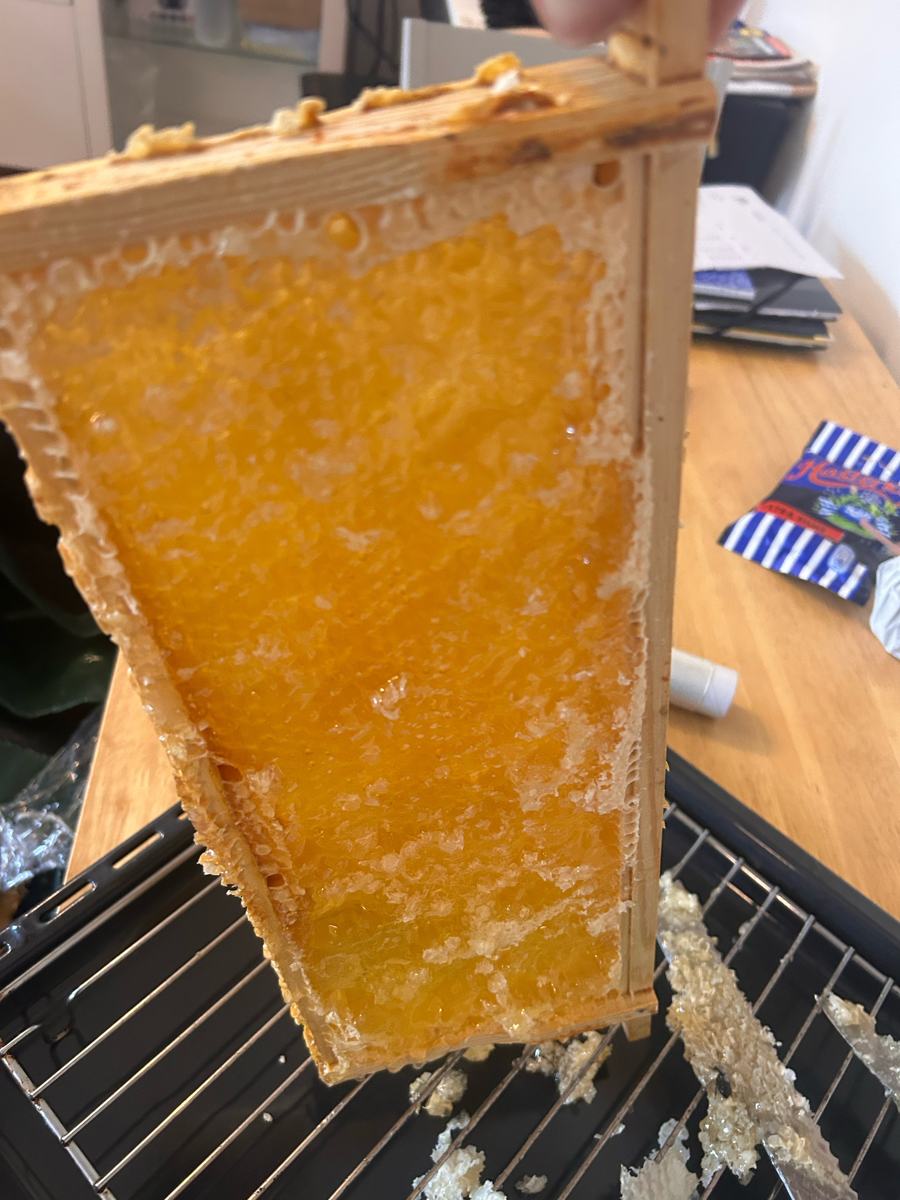
Frames from the hive
Only frames the bees had fully sealed with wax were taken, the sign that the honey is ripe.
Uncapping
The thin wax seal is lifted from each face of the comb by hand, opening the cells without disturbing the comb beneath.
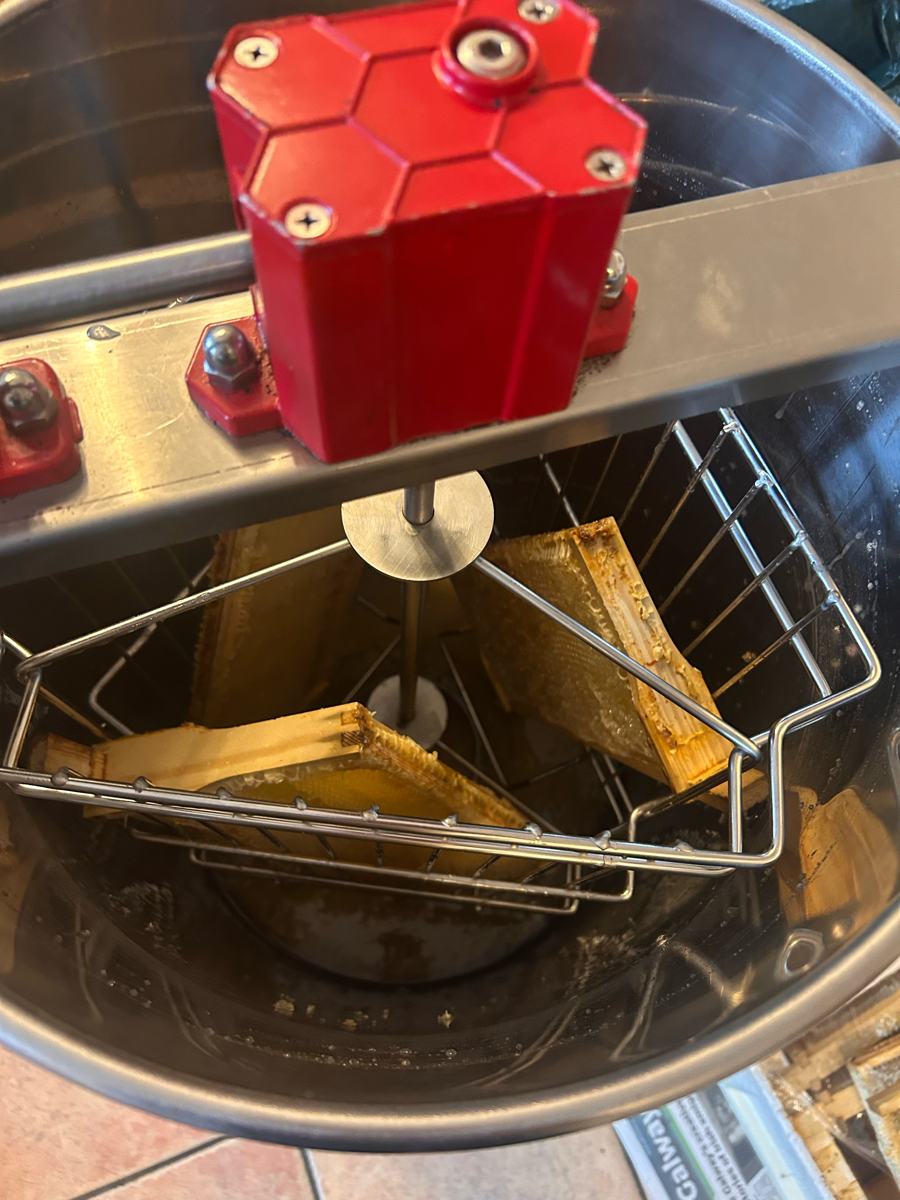
Spinning in the extractor
The frames are turned in a hand extractor. Spun out, not pressed, the honey leaves the comb gently.
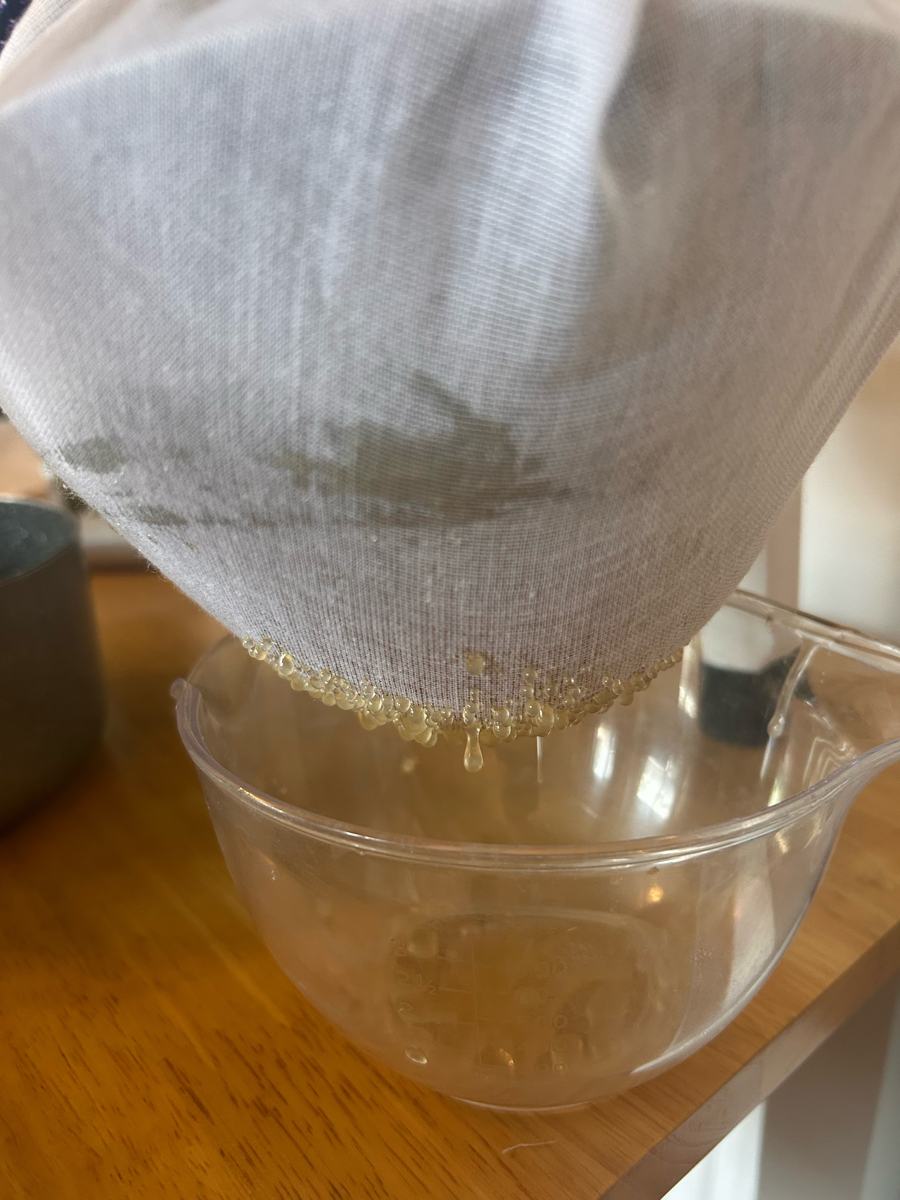
First drip
The first honey to run from the gate is light and crystal clear, the colour of late Galway sun.
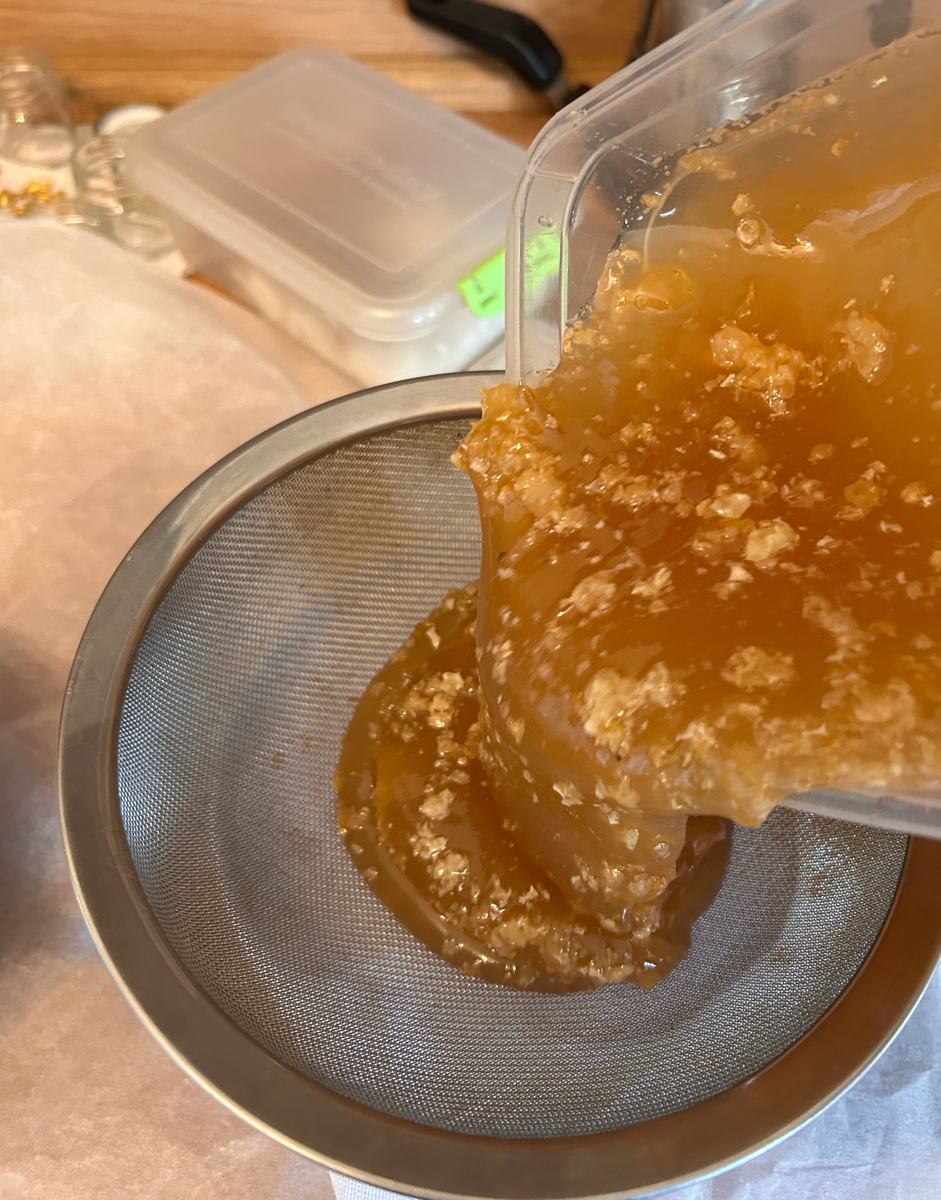
Sieve, then double muslin
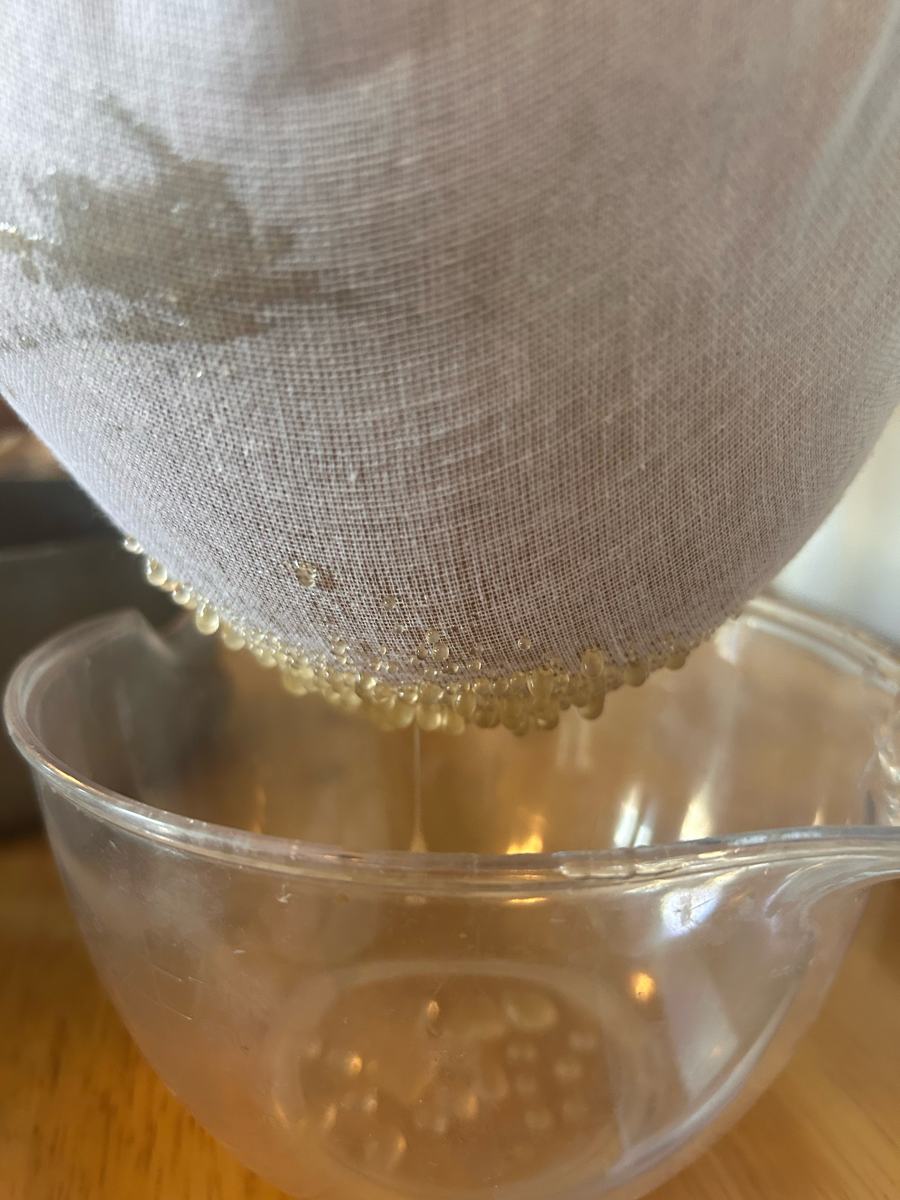
A coarse sieve first, then two layers of muslin. Enough to take out wax and the odd wandering bee; never fine enough to strip the pollen.
Settling and skimming
The honey rests so air rises to the top, and the fine foam is skimmed away by hand.
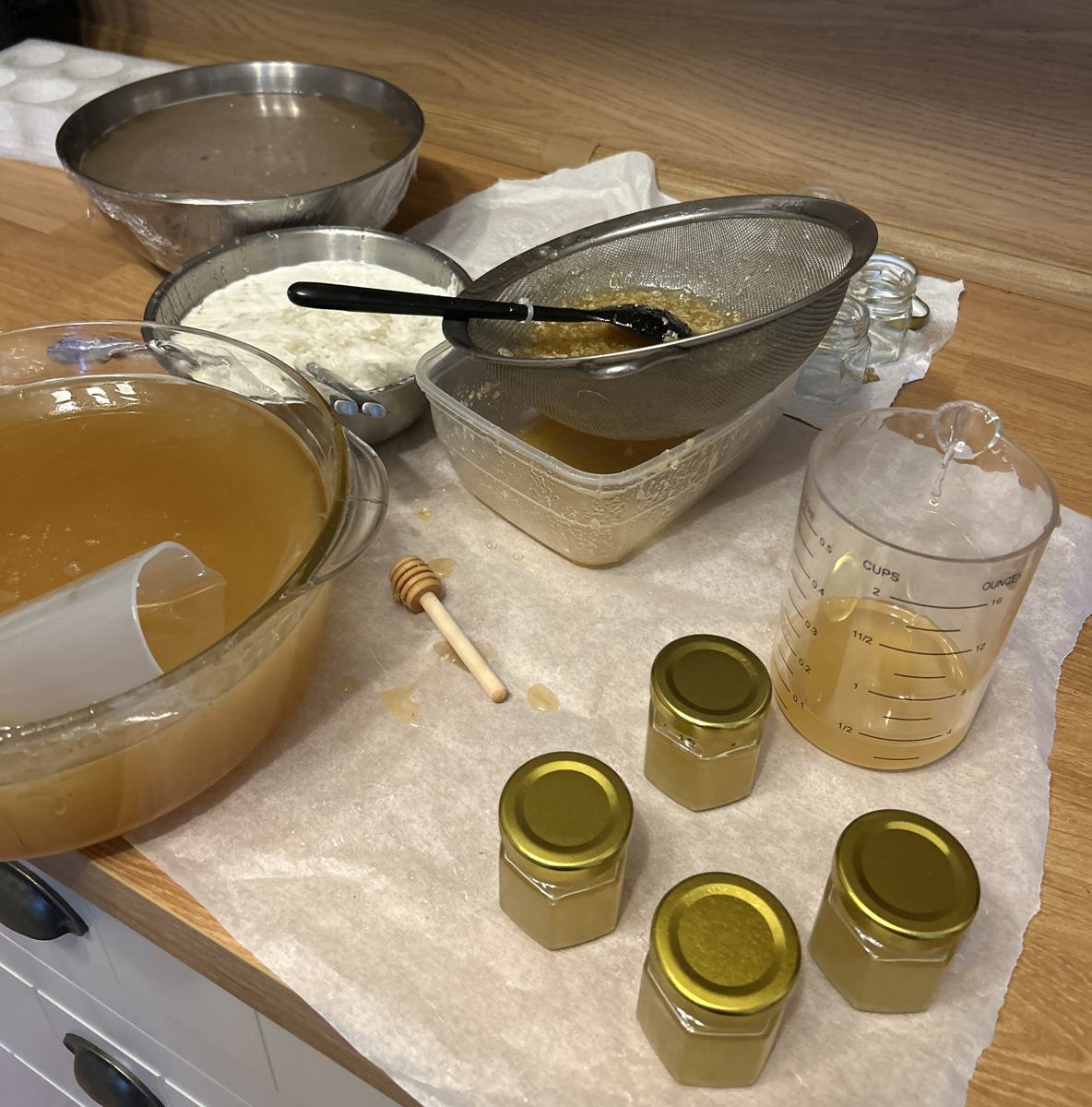
Jarring
Into clean glass, sealed, and labelled with this batch.
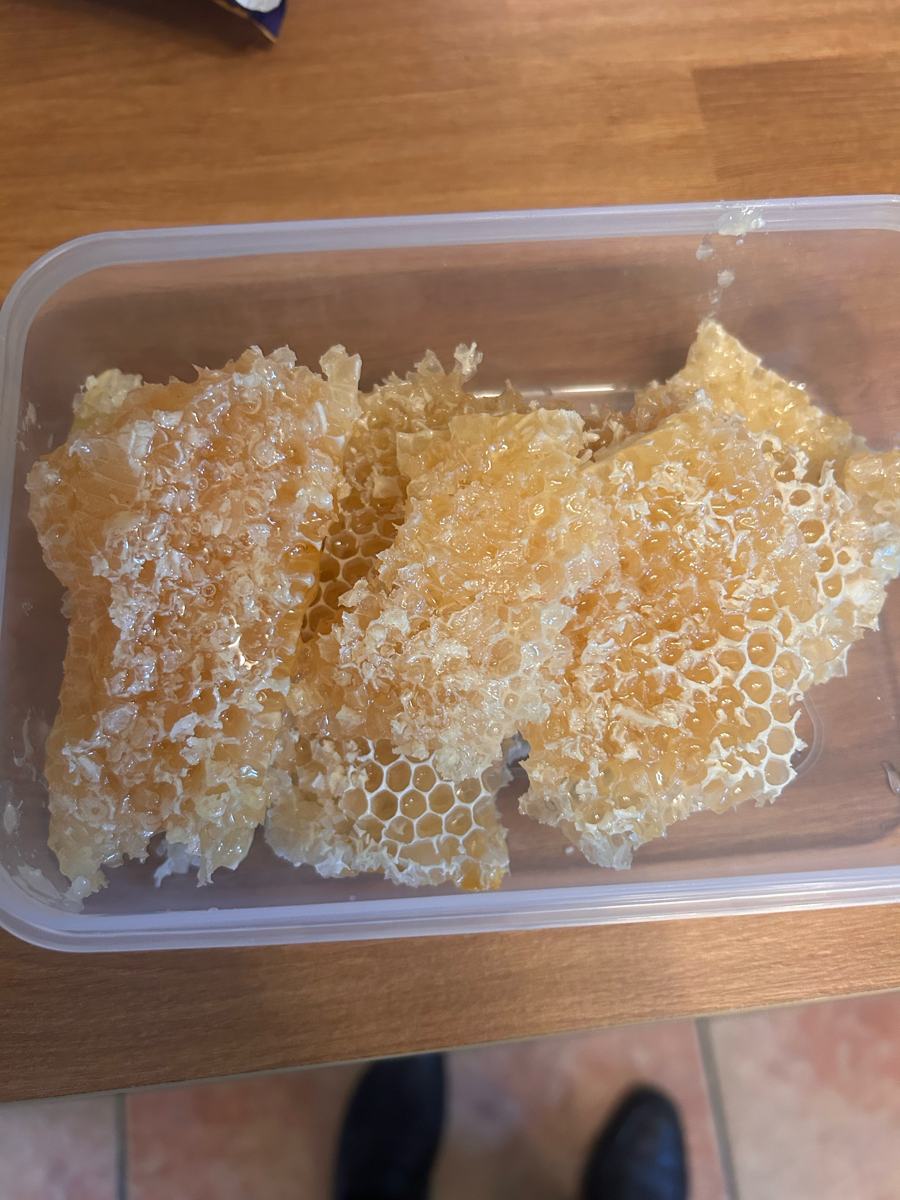
Beeswax cappings kept
Nothing wasted. The cappings are drained and kept, clean beeswax from the same hives.
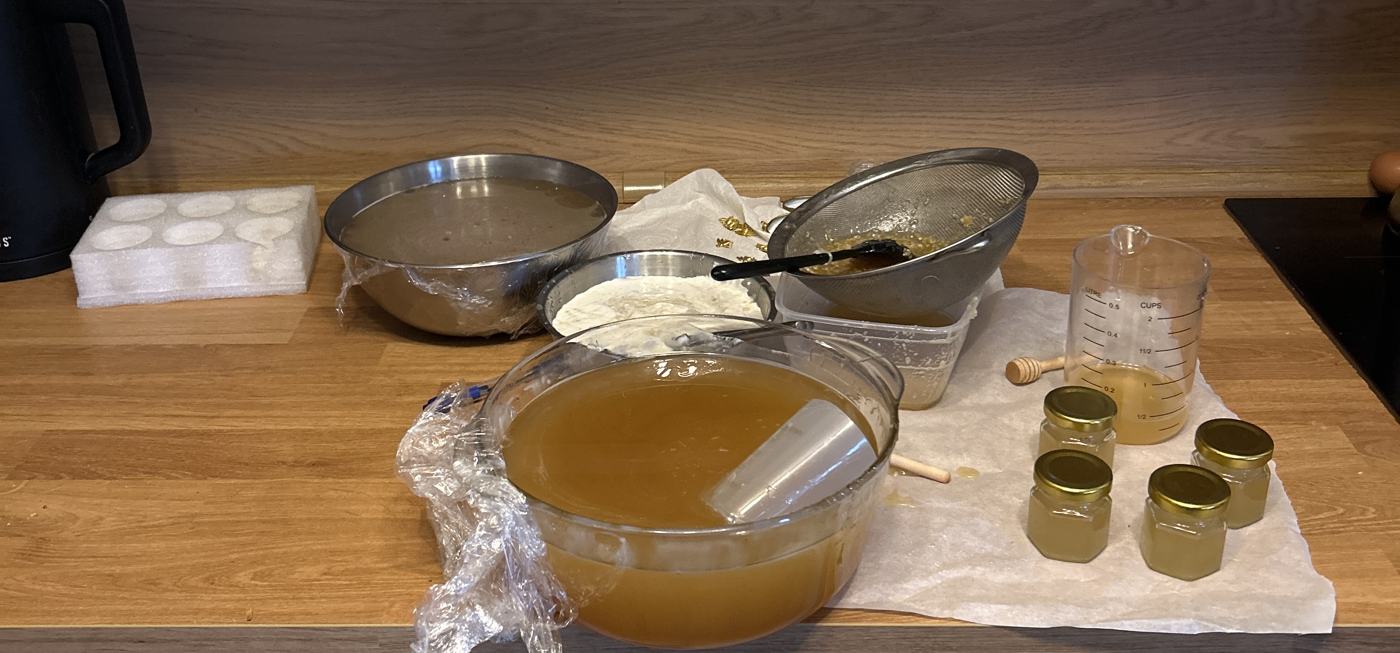
The whole batch was worked on a clean kitchen counter, on fresh baking paper, with clean equipment.
What is in the jar
- Moisture
- About 18%, tested with a refractometer. Good and ready to jar.
- Keeping
- Sealed and stored cool and dry, honey keeps for years. It may set or crystallise over time, which is natural and fine. To make it runny again, stand the jar in warm (not hot) water.
- Why it is cloudy
- Tiny air bubbles and fine wax from spinning, which rise over a day or two. A little white foam on top is only harmless bubbles, and the honey will set naturally over time.
- Spun, not dripped
- The very first frame was drip-drained by gravity alone and came out crystal clear. This batch was spun in the extractor, which mixes in a little more air and fine wax.
Made by hand, and by friends
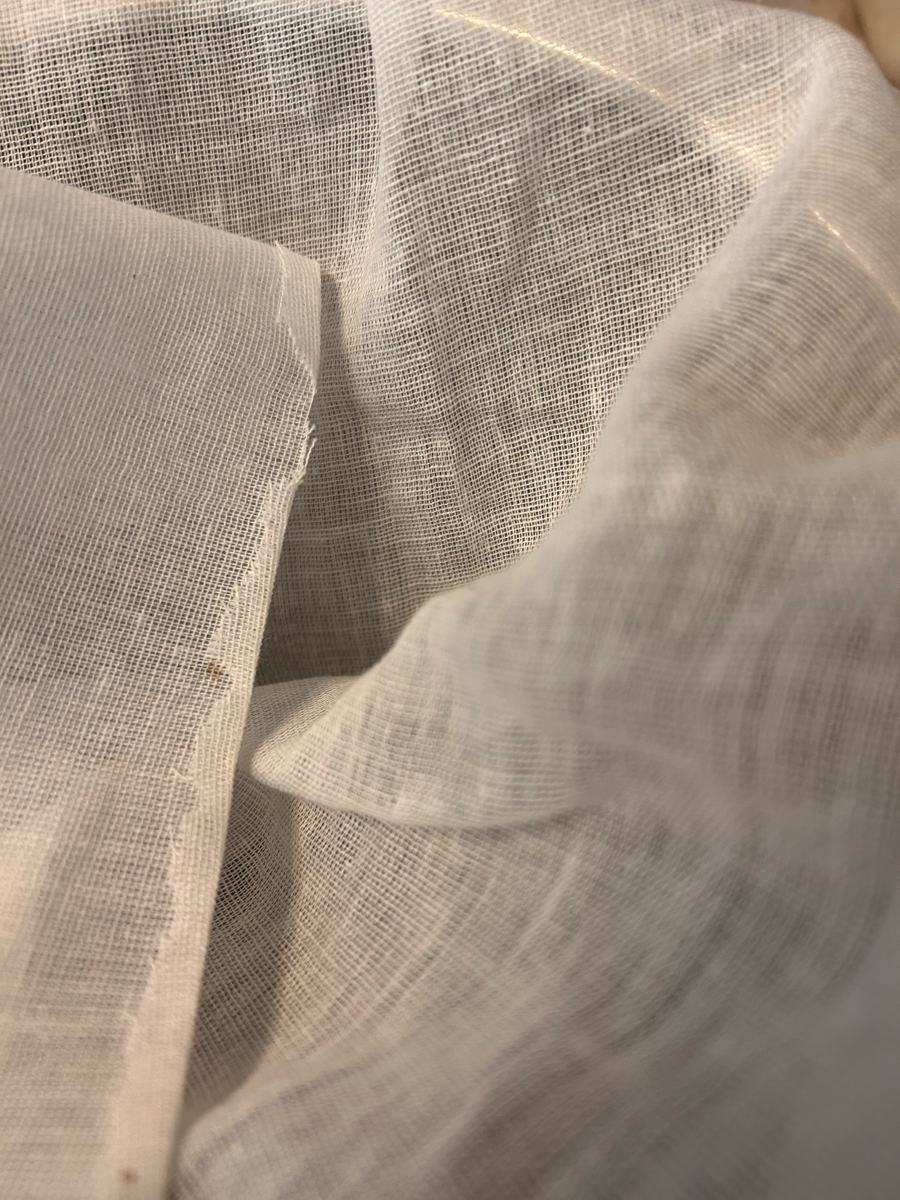
The muslin
The muslin cloths were kindly donated by Anne Joyce, a colleague at ATU’s hotel school; every drop passed through those three hygienic cloths. Go raibh maith agat, Anne.
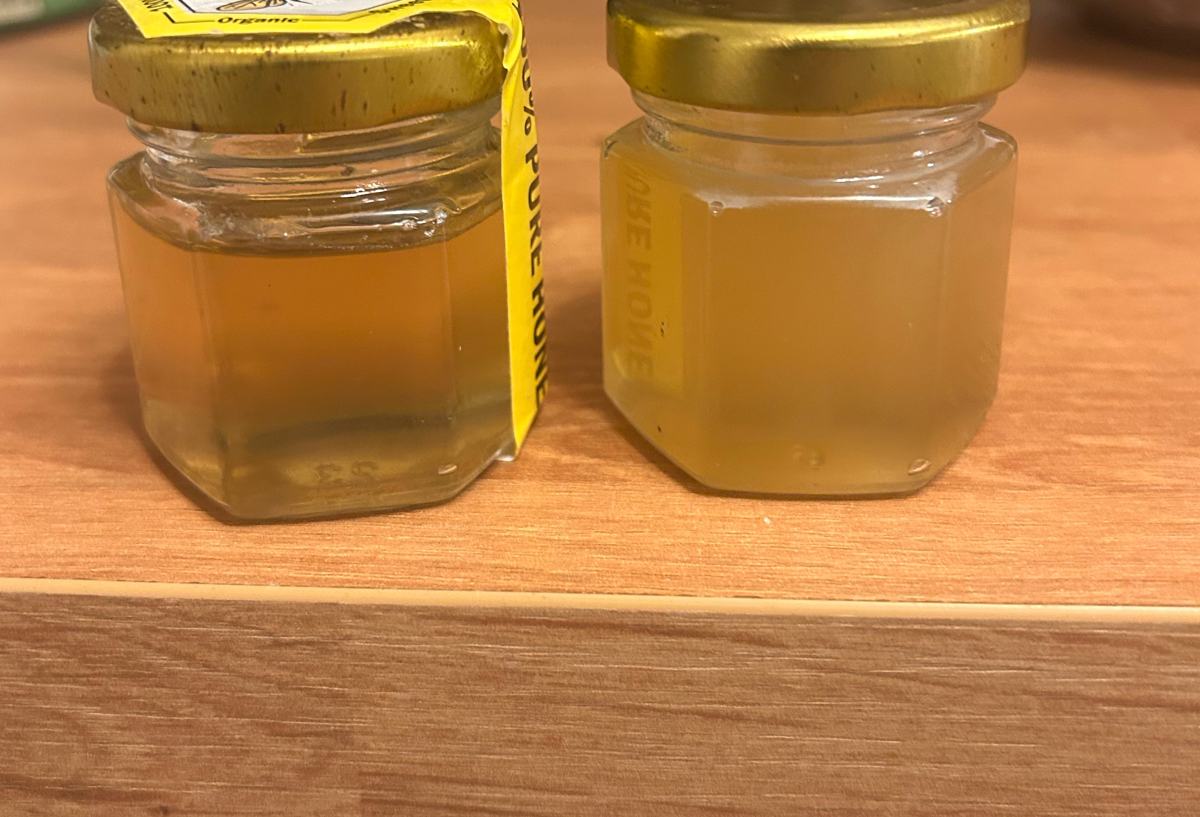
The two jars above came from the same pot. Spun honey can set naturally over time, turning pale and creamy. That is crystallisation, and it is a sign of raw, unheated honey. To bring it back, stand the jar in warm (not hot) water.
royalirishhoney.comA small gift, by hand
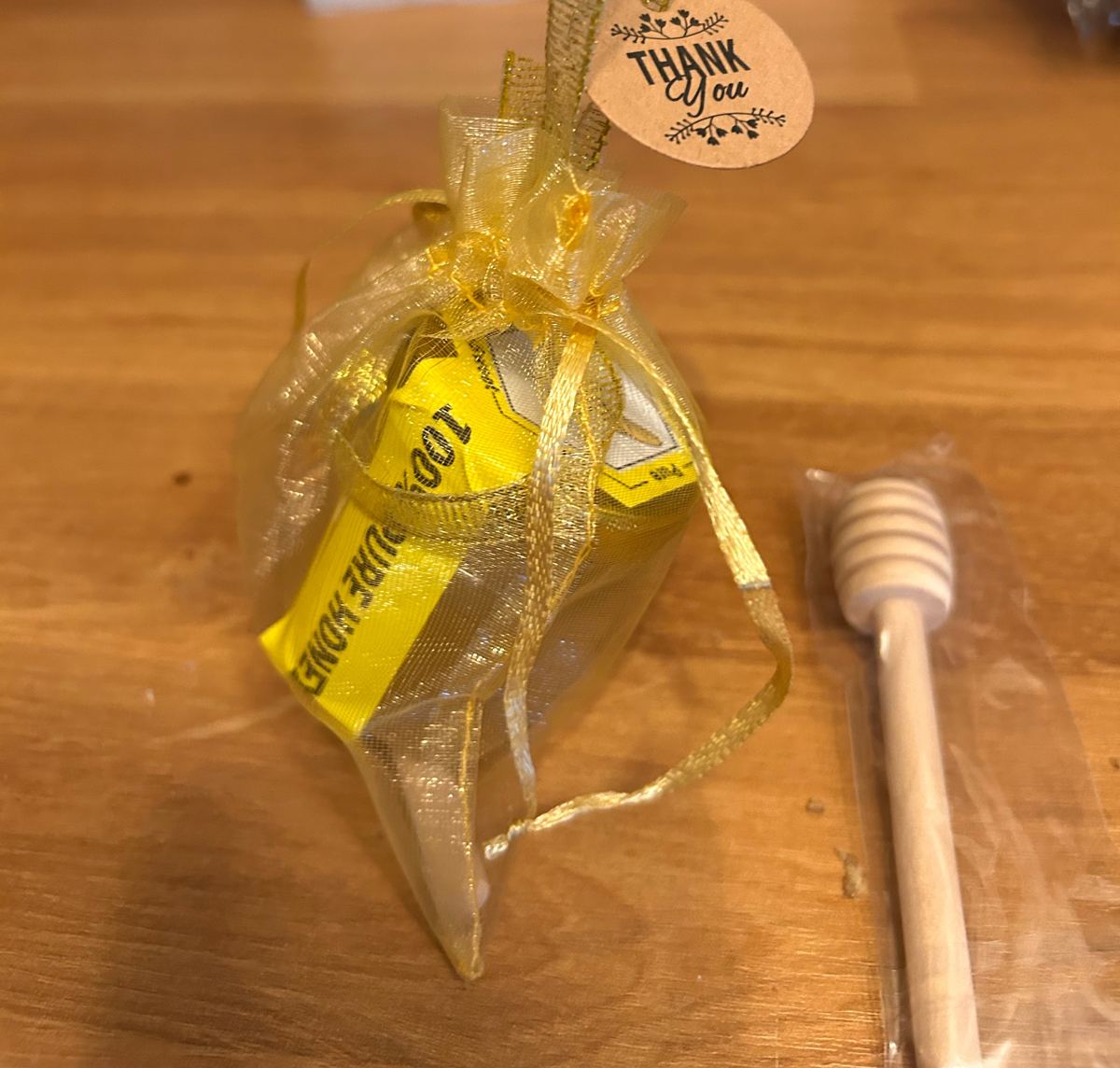
Each jar is finished with a gold lid, gathered into a gold organza bag with a little bee charm, and given with a wooden honey dipper and a ‘Thank you’ tag.